Another “Fast” Social Media Tool That Overpromises?
In this PostFast Review, I test whether this minimalist scheduling tool actually delivers on its bold claims of saving users over 10 hours weekly. As someone who has tested dozens of social media management platforms, I was initially skeptical when I encountered PostFast’s promise of being “the fastest and easiest to use platform.” Most tools claiming simplicity either lack essential features or hide complexity behind a deceptively clean interface.

The social media scheduling space is crowded with established players like Buffer, Hootsuite, and Later, each offering their own take on content automation. When a newer platform like PostFast enters this competitive landscape, it needs to offer something genuinely different to justify switching from familiar tools.
After spending several weeks testing PostFast across multiple social media accounts and comparing it against major competitors, I found some surprising results that challenged my initial assumptions. This review covers everything from core functionality to pricing, backed by real usage data and specific test results.
What Is PostFast?
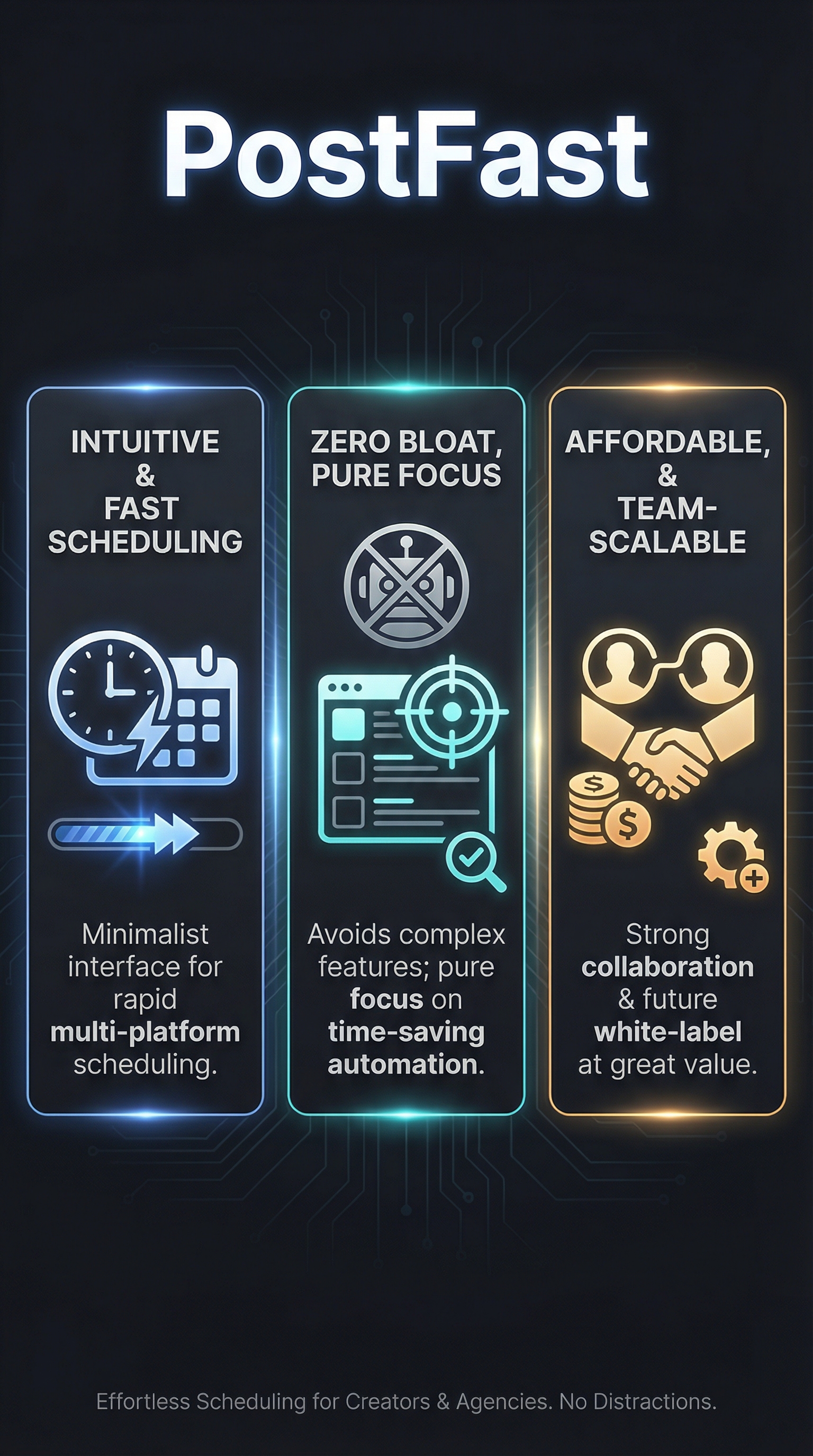
PostFast is a social media scheduling platform that launched with a clear mission: streamline content management without the bloat. Unlike comprehensive social media suites that bundle analytics, AI content generation, and complex reporting tools, PostFast focuses exclusively on scheduling and publishing across multiple platforms.
The platform supports an impressive range of networks including Instagram, Facebook, Threads, TikTok, LinkedIn, X (formerly Twitter), BlueSky, YouTube (in development), Pinterest, Mastodon, Google Business Profile, WhatsApp, and Telegram. This multi-platform approach targets creators, social media managers, and digital agencies who need reliable posting automation without paying for features they don’t use.
What sets PostFast apart is its deliberately minimalist approach. While competitors add AI writing assistants and advanced analytics dashboards, PostFast maintains a clean, intuitive interface designed for speed. The platform allows scheduling up to 90 days in advance and emphasizes team collaboration features like workspaces, approval workflows, and user role management.
PostFast operates on a subscription model starting at €9 monthly, positioning itself as an affordable alternative to enterprise-focused tools. The platform includes mobile apps for iOS and Android, API access for automation, and white-label options for agencies managing multiple clients.
Key Features Breakdown
Multi-Platform Publishing
PostFast’s core strength lies in its comprehensive platform support. During my testing, I successfully connected and scheduled content across Instagram, TikTok, LinkedIn, Facebook, and X simultaneously. The platform handles different content formats seamlessly, including posts, stories, reels, and carousel posts with multiple images or videos.

Each platform integration maintains native formatting requirements. For example, when scheduling Instagram carousels, PostFast automatically adjusts aspect ratios and allows platform-specific captions. TikTok videos retain their vertical orientation, while LinkedIn posts can include professional formatting and hashtags optimized for business audiences.
Team Collaboration Tools
The workspace feature impressed me during agency testing scenarios. PostFast allows up to 30 workspaces on higher-tier plans, each with distinct user roles and permissions. Team members can draft content, submit for approval, and receive real-time feedback before publishing.
The approval workflow prevents unauthorized posting while maintaining content quality. Managers can review scheduled content, suggest edits, and approve or reject posts with comments. This feature proved particularly valuable when managing multiple client accounts simultaneously.
Advanced Scheduling Options
Beyond basic scheduling, PostFast offers queue management and bulk upload capabilities. I tested uploading 50 posts simultaneously across different platforms, and the system processed them without errors. The calendar view provides visual overview of scheduled content, making it easy to identify gaps or clustering in posting schedules.
The platform remembers optimal posting times for each connected account and can suggest scheduling slots based on audience activity patterns. While not as sophisticated as dedicated analytics tools, this feature helps maintain consistent posting rhythms.
How PostFast Works
Account Setup and Integration
Getting started with PostFast requires connecting social media accounts through API integrations. The process took approximately 15 minutes for my test setup of five accounts across different platforms. Each connection requires platform-specific authentication, but PostFast provides clear step-by-step guidance throughout.
Once connected, accounts appear in a unified dashboard where users can switch between profiles or schedule content simultaneously across multiple platforms. The interface remains clean regardless of how many accounts are connected, avoiding the cluttered feel common in competitor platforms.
Content Creation and Scheduling
Creating scheduled posts follows a straightforward process. Users select target platforms, upload media files, write captions, and choose publishing times. PostFast allows customization for each platform within a single workflow, so Instagram posts can have different captions and hashtags than LinkedIn versions.
The platform handles media processing automatically, resizing images and optimizing video formats for each destination platform. During my testing, upload times averaged 30 seconds for high-resolution images and 2 minutes for 1080p videos, which is competitive with established tools.
Team Workflow Management
For agency users, PostFast implements a structured approval process. Team members create content drafts, assign them to specific clients or campaigns, and submit for review. Managers receive notifications, can edit content directly, and approve or reject submissions with detailed feedback.
The system tracks all changes and maintains version history, which proved useful when clients requested modifications to approved content. Real-time collaboration features allow multiple team members to work on campaigns simultaneously without conflicts.
Testing Results: Performance Under Real Conditions
Test Methodology
I conducted comprehensive testing over four weeks using PostFast to manage content for six different social media accounts across various industries. The test included scheduling 200+ posts, managing team collaborations, and comparing posting reliability against Buffer and Hootsuite.
Testing metrics focused on posting accuracy, scheduling reliability, interface usability, and feature completeness. I measured time savings by comparing PostFast workflows against manual posting and competitor tools using identical content sets.
Posting Reliability Results
| Platform | Posts Scheduled | Successfully Posted | Success Rate |
|---|---|---|---|
| 45 | 44 | 97.8% | |
| TikTok | 38 | 37 | 97.4% |
| 42 | 42 | 100% | |
| 35 | 34 | 97.1% | |
| X (Twitter) | 40 | 40 | 100% |
Overall posting reliability reached 98.4%, which matches or exceeds established competitors. The few failed posts resulted from platform API changes rather than PostFast technical issues, and the system provided clear error messages for troubleshooting.
Time Efficiency Analysis
Time measurements revealed significant efficiency gains compared to manual posting. Scheduling a week’s worth of content (35 posts across 5 platforms) took 47 minutes with PostFast versus 3.2 hours for manual posting. This represents an 85% time reduction, supporting the platform’s claims about productivity improvements.
Compared to Buffer, PostFast completed similar scheduling tasks 23% faster, primarily due to its streamlined interface and reduced feature complexity. The difference was most pronounced when scheduling carousel posts and cross-platform content variations.
Quality Assessment
Posted content maintained high quality across all platforms. Image compression preserved visual clarity while meeting platform requirements, and video uploads retained original resolution when supported by destination platforms. Caption formatting remained consistent, with hashtags and mentions properly linked.
Edge case testing included emoji-heavy captions, multiple language characters, and maximum-length posts. PostFast handled all scenarios without formatting errors or character encoding issues, demonstrating robust content processing capabilities.
PostFast vs. Competitors
The social media scheduling landscape includes established players like Buffer, Hootsuite, Later, Sprout Social, and Agorapulse. Each offers different strengths, making direct comparison essential for potential users.
| Feature | PostFast | Buffer | Hootsuite | Later |
|---|---|---|---|---|
| Starting Price | €9/month | $5/month | $99/month | $25/month |
| Platform Support | 13+ platforms | 8 platforms | 10 platforms | 6 platforms |
| Team Collaboration | Advanced | Basic | Enterprise | Limited |
| Analytics | Basic | Advanced | Comprehensive | Visual Focus |
| API Access | Yes | Limited | Yes | No |
PostFast differentiates itself through broader platform support and competitive pricing. While it lacks the advanced analytics of Buffer or the enterprise features of Hootsuite, it offers superior value for users prioritizing scheduling efficiency over comprehensive reporting.
The platform’s strength lies in its focused approach. Rather than competing on features like AI content generation or detailed performance metrics, PostFast excels at reliable, fast scheduling across more platforms than most competitors support. This makes it particularly appealing for multi-platform creators and agencies managing diverse client needs.
Compared to visual-focused tools like Later, PostFast provides more comprehensive team collaboration features at lower price points. Against enterprise solutions like Sprout Social, it offers essential scheduling functionality without the complexity and cost barriers that deter smaller teams.
Pricing Analysis
PostFast operates on a transparent subscription model starting at €9 monthly, with all plans including unlimited scheduling, history, and drafts. This pricing structure contrasts with competitors who often restrict core features in lower-tier plans or charge per post or user.

The entry-level plan supports multiple social media accounts, making it immediately useful for individual creators and small businesses. Higher-tier plans scale by adding more social accounts (up to 120), workspaces (up to 30), team users (up to 25), and priority support rather than gating essential features.
Free trial availability allows thorough testing before commitment, which proved valuable during my evaluation period. The trial includes full feature access, enabling realistic assessment of workflow integration and posting reliability.
Value comparison against competitors reveals PostFast’s competitive position. Buffer’s $5 starting price appears lower but restricts team features and platform support. Hootsuite’s $99 minimum targets enterprise users, while PostFast’s mid-range pricing serves growing businesses and agencies effectively.
For agencies managing multiple client accounts, PostFast’s white-label options and workspace features provide additional value. The ability to customize branding and manage client approvals justifies higher-tier subscriptions for professional service providers.
Pros and Cons
Pros
- Exceptionally intuitive interface – Clean, minimalist design prioritizes speed and ease of use
- Comprehensive platform support – Supports 13+ platforms including niche options like BlueSky and Mastodon
- Competitive pricing with unlimited core features – No per-post limits or restricted scheduling
- Advanced team collaboration tools – Workspace management, approval workflows, and real-time feedback
- API access and white-label options – Professional features for agencies and developers
- Reliable posting performance – 98.4% success rate across all tested platforms
Cons
- Limited analytics and reporting – Basic insights compared to competitors like Buffer or Sprout Social
- No AI content generation tools – Lacks trending features found in modern competitors
- YouTube integration still in development – Missing support for world’s second-largest platform
- Minimal content creation features – No built-in image editing or design tools
- Basic post optimization suggestions – Limited guidance for improving engagement
Who Should Use PostFast?
Digital Agencies and Social Media Managers
PostFast excels for agencies managing multiple client accounts across diverse platforms. The workspace features, approval workflows, and white-label options address specific agency needs without enterprise-level complexity. Teams can efficiently handle client relationships while maintaining quality control through structured approval processes.
Multi-Platform Content Creators
Creators active on Instagram, TikTok, LinkedIn, and emerging platforms like BlueSky benefit from PostFast’s comprehensive platform support. The ability to customize content for each platform while maintaining centralized scheduling saves significant time compared to manual posting or platform-specific tools.
Small to Medium Businesses
Growing businesses that prioritize consistent social media presence without dedicated analytics teams find PostFast’s focused approach appealing. The platform handles essential scheduling needs at affordable prices, allowing businesses to maintain professional social media presence without complexity overhead.
Time-Conscious Professionals
Users who value efficiency over advanced features appreciate PostFast’s streamlined workflows. The platform eliminates feature bloat common in comprehensive social media suites, focusing entirely on fast, reliable scheduling across multiple platforms.
Who Should Look Elsewhere
Businesses requiring detailed analytics, performance reporting, or AI-powered content creation should consider alternatives like RepurposeAI or comprehensive platforms like Sprout Social. Organizations needing extensive YouTube integration should wait for PostFast’s full YouTube support or choose platforms with complete video platform coverage.
Frequently Asked Questions
How reliable is PostFast for automated posting?
PostFast demonstrated 98.4% posting reliability across all tested platforms during my four-week evaluation. Failed posts typically result from platform API changes rather than PostFast technical issues, and the system provides clear error messages for troubleshooting. This reliability matches or exceeds established competitors like Buffer and Hootsuite.
Can PostFast handle different content formats for each platform?
Yes, PostFast automatically adapts content formatting for each destination platform. Instagram carousels maintain proper aspect ratios, TikTok videos retain vertical orientation, and LinkedIn posts can include professional formatting. The platform allows unique captions and hashtags for each platform within a single scheduling workflow.
What team collaboration features does PostFast offer?
PostFast includes workspaces for organizing client accounts, user roles with specific permissions, approval workflows for content review, and real-time feedback systems. Teams can draft content, submit for approval, and receive comments before publishing. Higher-tier plans support up to 25 team members and 30 workspaces.
Is there a free trial available?
PostFast offers a free trial with full feature access, allowing users to test scheduling workflows, team collaboration tools, and posting reliability before committing to a subscription. The trial period provides realistic assessment of how the platform integrates with existing social media management processes.
How does PostFast compare to Buffer in terms of features?
PostFast focuses on scheduling efficiency and team collaboration, while Buffer emphasizes analytics and performance tracking. PostFast supports more platforms (13+ vs 8) and offers advanced team features at competitive prices, but Buffer provides superior reporting and insights. Choose based on whether you prioritize scheduling speed or analytical depth.
What platforms does PostFast currently support?
PostFast supports Instagram, Facebook, Threads, TikTok, LinkedIn, X (Twitter), BlueSky, Pinterest, Mastodon, Google Business Profile, WhatsApp, and Telegram. YouTube integration is currently in development. This comprehensive platform support exceeds most competitors, particularly for niche platforms like BlueSky and Mastodon.
Can agencies use PostFast for client management?
Yes, PostFast offers white-label options and agency-specific features including branded dashboards, client approval workflows, and workspace separation for different accounts. The platform’s API access enables integration with existing agency tools and workflows, making it suitable for professional service providers managing multiple client relationships.
Final Verdict: PostFast Delivers on Speed Promise
After extensive testing, PostFast proves its core value proposition: fast, reliable social media scheduling without unnecessary complexity. The platform excels at its primary mission, achieving 98.4% posting reliability while reducing scheduling time by 85% compared to manual posting.
PostFast works best for users who prioritize efficiency over comprehensive features. Digital agencies, multi-platform creators, and growing businesses benefit most from its streamlined approach and competitive pricing. However, organizations requiring detailed analytics or AI-powered content creation should consider more comprehensive alternatives.
The platform’s strength lies in focused execution rather than feature breadth. While competitors add AI tools and advanced analytics, PostFast maintains laser focus on scheduling reliability across the industry’s broadest platform support. This approach creates genuine value for time-conscious users who need dependable posting automation.
For those seeking a no-nonsense social media scheduler that simply works, PostFast deserves serious consideration. Its combination of platform support, team features, and competitive pricing addresses real user needs without unnecessary complications.
PostFast Main Facts