

Disclosure: Some of the links on Daily Digital Reviews are affiliate links. This means that if you click on a link and make a purchase, we may earn a small commission — at no extra cost to you.
AI Commerce Automation — Interesting Concept, Thin Track Record
SellerAI is pitching itself as something different from every other e-commerce tool on the market right now. Not a template builder. Not a listings helper. An autonomous commerce operator. That’s a bold claim, and bold claims deserve a hard look. I reviewed the vendor’s documentation, pricing pages, and available user commentary to give you a straight read on whether this is worth your attention in 2026.
Quick Verdict: SellerAI has a differentiated vision — an AI agent that runs your whole store, not just one part of it. The credit-based pricing is clear and accessible, starting free. But verified user outcomes are scarce, and SellerCart (their native storefront) isn’t out yet, which makes this a promising early-stage bet rather than a proven platform.
Overall Rating: 2.8 / 5 ⭐
Feature depth: 3/5 · Ease of use: 2.5/5 · Pricing value: 3.5/5 · Trust signals: 2/5
What Is SellerAI?
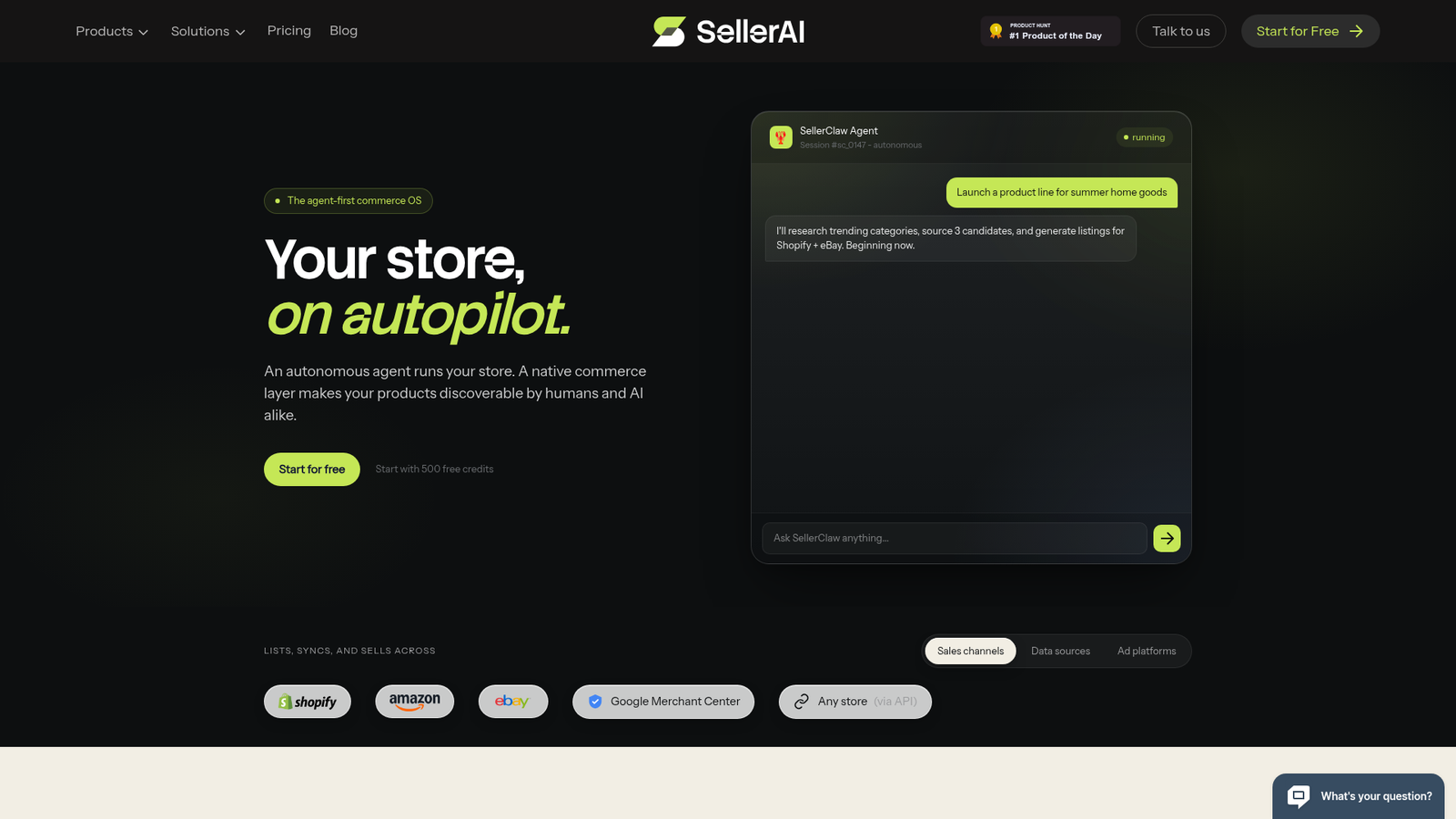
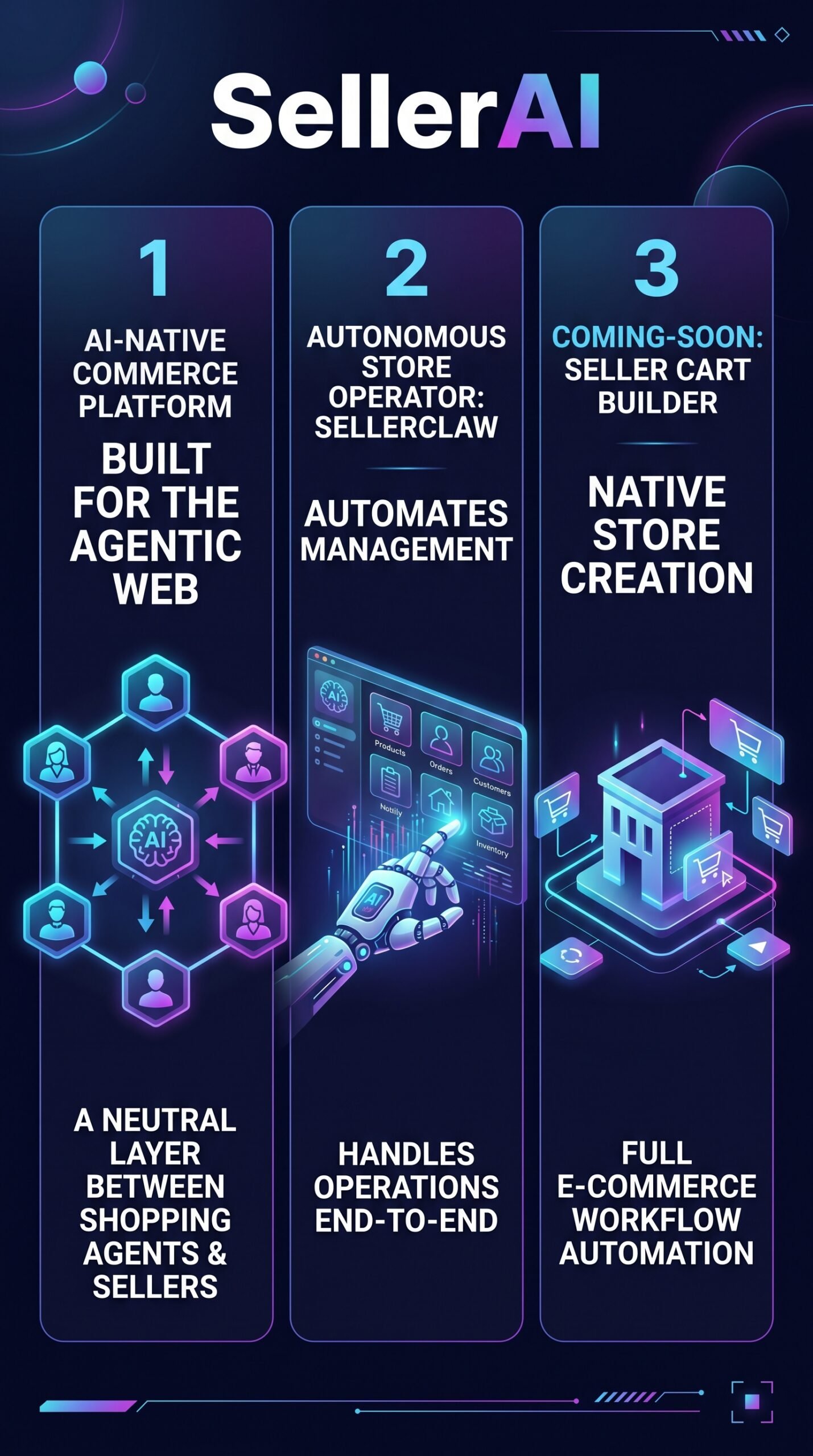
SellerAI is an AI-native e-commerce platform built around the idea of “agentic commerce” — a future where AI shopping agents browse, compare, and buy on behalf of consumers. The company describes itself as a neutral commerce layer sitting between those AI agents and trusted US sellers.
Right now the platform has two products. SellerClaw is the live one: an autonomous commerce agent designed to run online store operations end-to-end. SellerCart is the second product, still listed as coming soon — a native store builder designed specifically for the AI-mediated web. The target users appear to be e-commerce merchants who want to automate as much of their store workflow as possible, rather than just getting help with isolated tasks.
Key Features
SellerClaw — Autonomous Store Agent
SellerClaw is the core product available today. The vendor describes it as an autonomous agent that handles end-to-end store operations. Third-party launch commentary (not the official docs) goes further, describing functions like sourcing, listings, ads, fulfillment, customer support, and direct supplier connections — though those details should be treated as inferred positioning rather than confirmed technical specs. What the pricing page does confirm is that the agent can write product listings, reply to customers, run market research, and connect to multiple sales channels.
SellerCart — Agentic Storefront (Coming Soon)
SellerCart is described as a native store builder designed for the agentic web. The idea is that storefronts will need to be discoverable by AI shopping assistants, not just by human browsers. SellerAI is positioning SellerCart as the front-end answer to that shift. It’s not available yet, so there’s nothing to evaluate on this one beyond the concept.
Credit-Based Automation Engine
Every action the SellerClaw agent takes costs credits. Reading an email, writing a listing, running a market research scan — each task draws from your monthly credit pool. The pricing page shows the breakdown clearly: roughly 70% of the credit cost comes from AI reasoning, 25% from tool calls (API lookups, web searches, image generation), and 5% from delivering the result. You can also run SellerClaw locally on your own machine, which eliminates tool-call credits and can cut usage by around 60%, according to the vendor.
How SellerAI Works
The Four-Step Agent Loop
According to the vendor’s pricing page, every task runs through four stages. You submit a request — that’s free, no credits charged. The agent thinks through the plan, which accounts for most of the credit cost. It then calls real tools like marketplace APIs, web search, or image generation. Finally it delivers the result, and credits are deducted to the unit from your monthly balance.
Self-Hosting Option
SellerAI offers a local install of SellerClaw via a single command-line script, available for Mac, Windows, and Linux. When running locally, tool calls happen on your own hardware at no credit cost. Their docs say teams typically get 40–70% more work out of the same credit budget this way. You still need a paid plan — the local build isn’t open source, just a local-run version of the same agent.
What the Evidence Shows
What the Vendor Claims
SellerAI’s own messaging is consistent: automate everything about running an e-commerce business, and do it through an agentic architecture that’s ready for AI-driven shopping discovery. Their LinkedIn presence reinforces the “neutral commerce layer” framing. The pricing page is detailed and honest about how credits work, which is a good sign for a young product.
What Users Report
This is where the picture gets thin. The available research doesn’t surface a meaningful body of verified reviews on G2, Trustpilot, Capterra, or Reddit for sellerai.com. What exists is mostly launch-era commentary and interest around the concept. That’s not the same as satisfied customers. It’s worth noting that search results also return a separate product called SellerAi.in — an AI listing tool for Amazon and Flipkart sellers — which is a completely different product and can cause confusion when you’re researching this one.
How It Stacks Up Against the Category
Traditional platforms like Shopify and WooCommerce win on ecosystem maturity, plugin libraries, and proven reliability. SellerAI’s genuine differentiator is the agentic-commerce angle — the idea that your store should be visible and navigable by AI shopping agents, not just human visitors. That’s a real strategic gap that existing platforms haven’t fully addressed. Whether SellerAI actually fills it in production is the open question.
SellerAI vs Competitors
Here’s how SellerAI compares to established platforms on features and pricing. For deeper looks at other AI commerce tools, check out our StoreClaw review and our Pagepilot review.
| Feature | SellerAI | Shopify | WooCommerce |
|---|---|---|---|
| Autonomous store agent | Yes (SellerClaw) | No (third-party apps) | No (plugins only) |
| Native storefront builder | Coming soon | Yes | Yes (via WordPress) |
| Agentic web discovery | Yes (core focus) | Partial (via apps) | No |
| Self-hosting option | Yes | No | Yes |
| Free plan available | Yes (500 credits) | Free trial only | Free (self-hosted) |
| Starting paid price | $10/month | $29/month | Free + hosting costs |
| Verified user review base | Very limited | Extensive | Extensive |
Pricing
SellerAI uses a credit-based model where credits represent units of agent work. The free plan gives you 500 credits forever with no card required. Paid plans run from $10/month (1,000 credits) up to $320/month (40,000 credits). The Growth plan at $36/month includes 4,000 credits and unlimited sales channel connections. The fixed exchange rate is 100 credits = $1. You can also buy one-time top-up packs mid-month without upgrading your plan. Enterprise pricing is available for catalogs above 40,000 credits per month. Full details are on the SellerAI pricing page.
Pros and Cons
Pros
- Credit-based pricing is transparent, flexible, and starts completely free
- Self-hosting option can cut credit usage by 40–70%, making it cheaper than cloud-only tools
- Strong conceptual differentiation — agentic commerce is a real and growing category
- End-to-end automation scope (listings, customer replies, market research) is broader than most point tools
- Per-task credit estimates give you cost visibility before running big jobs
Cons
- No substantial verified user review base — can’t confirm real-world reliability
- SellerCart (the native storefront) is still coming soon, leaving a gap in the product
- A separate product called SellerAi.in creates naming confusion when researching this tool
Who Should Use SellerAI?
SellerAI looks best suited for a few specific types of sellers. If you run a lean operation and want to automate repetitive tasks like listing writes, customer replies, and competitor research, the credit model means you only pay for what the agent actually does. If you’re thinking ahead about AI-driven shopping discovery and want infrastructure that’s built for that shift, SellerAI’s thesis aligns directly with where e-commerce may be heading.
It could also appeal to privacy-conscious sellers who want a self-hosted option — the local SellerClaw install keeps supplier data and customer emails on your own machine.
Who should look elsewhere: if you need a battle-tested storefront with a deep app ecosystem right now, Shopify or WooCommerce are much further along. And if you want to see a long track record of verified customer outcomes before committing, SellerAI isn’t there yet. Also worth reading our Kraflio review if you’re comparing AI tools for product content specifically.
SellerAI Main Facts
Frequently Asked Questions
What is SellerAI used for?
SellerAI is an AI-native e-commerce platform designed to automate store operations through an autonomous agent called SellerClaw. It handles tasks like writing product listings, responding to customers, and running market research, all charged on a per-task credit basis.
Is SellerAI free to try?
Yes. There’s a permanent free plan that gives you 500 credits with no credit card required. That’s enough to run a few real tasks and see how the credit system works before committing to a paid plan.
What is SellerClaw?
SellerClaw is SellerAI’s autonomous commerce agent — the live product available now. It connects to your sales channels and automates store workflows using AI. It can also run locally on your own machine to reduce credit costs.
Is SellerAI the same as SellerAi.in?
No. SellerAi.in is a separate product focused on generating product listings and creative content for marketplaces like Amazon and Flipkart. SellerAI at sellerai.com is a different platform with a broader autonomous-commerce scope. Don’t mix them up when reading reviews.
Final Verdict
SellerAI is one of the more interesting early-stage commerce tools I’ve looked at recently. The agentic-commerce framing isn’t just marketing fluff — the idea that storefronts need to be discoverable by AI agents is a real infrastructure problem, and SellerAI is positioning itself to solve it before most competitors have even noticed the gap.
But interesting vision and proven execution are two different things. Right now, verified user outcomes are scarce, SellerCart doesn’t exist yet, and the naming confusion with SellerAi.in adds friction. The pricing structure is genuinely well thought out, and the free tier makes it low-risk to explore. If you’re curious about agentic commerce and willing to be an early adopter, it’s worth trying. If you need something proven today, stick with a more mature platform and check back on SellerAI in 12 months.
Review Methodology
This review is based on analysis of SellerAI’s official website, pricing pages, and feature documentation, combined with available user commentary and launch-era reports gathered from LinkedIn, SourceForge, and third-party video and social commentary. No hands-on testing was conducted.